
Elisabeth Pilgrimage Route in Slovakia
Pilgrimage travel has been one of Europe’s strongest tourism trends in recent years and will in future also enrich holidays in Slovakia in the Kosice region and the city of the same name. A few days ago, the new Elisabeth Pilgrimage Route was inaugurated, connecting the Hungarian town of Sarospatak with Kosice in Slovakia over a distance of around 70 kilometres. Along the pilgrimage route, which passes through a total of ten towns and municipalities in Hungary and Slovakia and is lined with numerous affordable hotels in Slovakia, pilgrims follow in the footsteps of Saint Elisabeth of Thuringia, who was born in Sarospatak. The pilgrimage’s destination is the Elisabeth Cathedral in Kosice, which is already one of Slovakia’s most important sights.
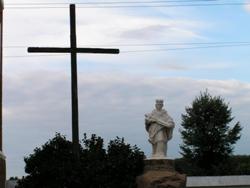 Der neue Elisabeth Pilgerweg führt von Sarospatak (Ungarn) nach Kosice (Slowakei).
Date: 30/09/2026
The first pilgrimage along the Elisabeth Pilgrimage Route from Sarospatak to Kosice set off last week. The pilgrims first received the blessing of the archbishops of Eger and Kosice, then began their journey from Sarospatak towards the Elisabeth Cathedral in Slovakia. Christian pilgrims owe the opportunity to undertake a new pilgrimage between Hungary and Slovakia, on the one hand, to the Elisabeth Foundation based in Sarospatak and, on the other, to the Slovak organisation “Pearls of the Gothic Route”, which is dedicated to protecting and preserving Gothic architecture in Slovakia, including the Elisabeth Cathedral in Kosice.
In addition to its religious and tourism aspects, the Elisabeth Pilgrimage Route is also intended to promote understanding between Slovaks and Hungarians, which, particularly in the border region, has not always been straightforward for historical reasons. Between the two world wars, for example, Kosice alternated between belonging to Hungary and to what was then Czechoslovakia for periods of several years, before the regional capital became part of Czechoslovakia permanently in 1945 and, since 1993, of the newly established Slovakia. A Hungarian minority still lives in Kosice today.
Kai Rebmann
Photo: Ilya
